
Table of Contents
Wood front door refinishing is the most effective way to restore your entryway’s natural beauty and protect it against California’s intense climate without the hassle of removing the door. Your front door is the smile of your home, but years of harsh California sun, coastal humidity, and daily wear can turn a beautiful wood entrance into a faded, peeling eyesore. If you are searching for a way to tackle sun-damaged front door repair or wondering how to refinish a front door without removing it, you are in the right place.
Many homeowners hesitate to start a front door restoration project because taking a heavy, solid wood door off its hinges seems like a daunting, multi-day task that leaves the home exposed. The good news? You don’t have to take it down. With the right preparation, tools, and a bit of patience, you can execute a professional-grade wood front door refinishing right where it stands.
In this 2026 updated guide, we will walk you through the exact steps professional door refinishers use to strip, sand, and stain a front door on its hinges. Whether you are dealing with a weathered mahogany entry or peeling varnish on an oak door, this method will save you time, money, and hassle.
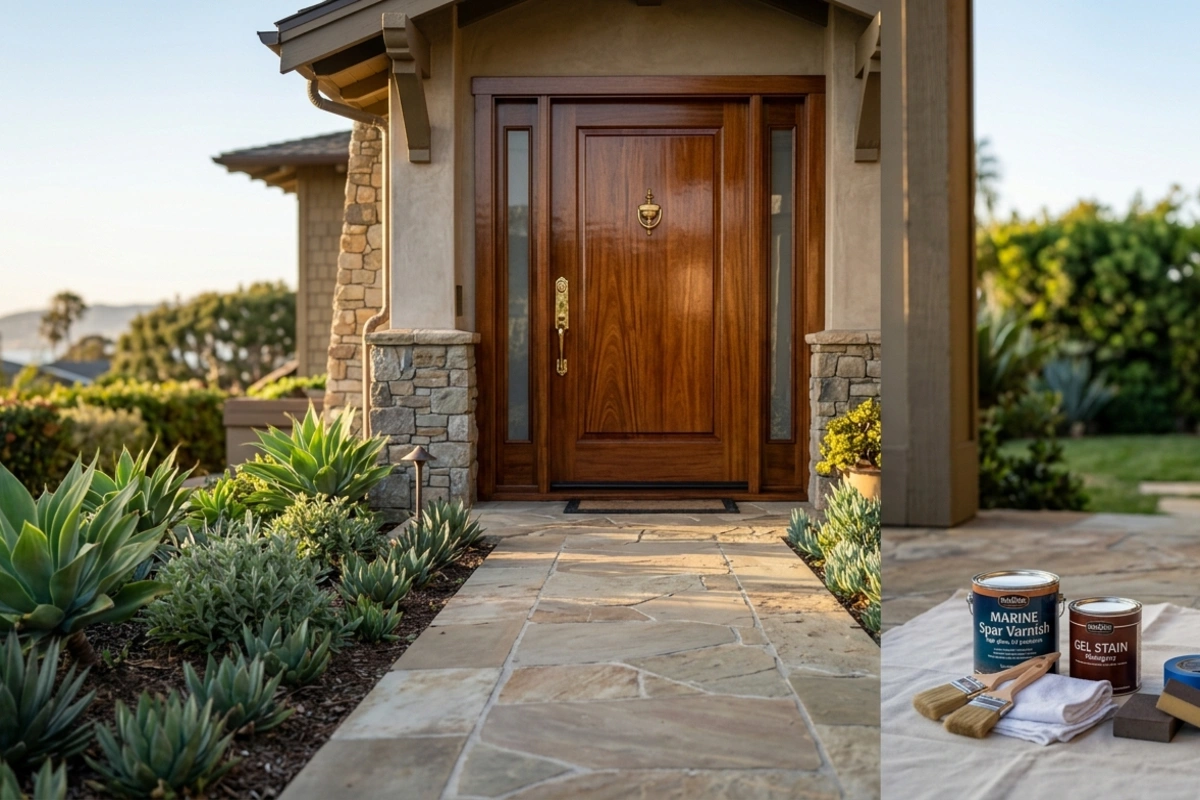
Can You Really Refinish an Exterior Wood Door on the Hinges?
The short answer is: Absolutely. In fact, many professional door refinishing services prefer this method for quick touch-ups or when dealing with older, fragile hinges that might strip if removed.
Leaving the door on its hinges offers several massive advantages:
- Security: Your home is never left open and vulnerable overnight.
- Convenience: You bypass the heavy lifting and the nightmare of trying to re-align a heavy wooden door back into its frame.
- Time-Saving: You eliminate the teardown and re-installation phases of your exterior wood door restoration.
However, doing a sand and stain front door project vertically requires a specific technique to avoid drip marks, uneven staining, and dust getting everywhere. It is the perfect solution for doors that need a cosmetic refresh, a new layer of exterior door stain, or minor peeling varnish on door fix.
(Note: If your door requires extensive structural repair, deep rot removal, or a complete chemical dip, removing it might be the only option. But for 90% of fading, weather damage, and routine maintenance, leaving it up is the smart choice.)
Essential Tools and Materials for On-Hinge Door Restoration
Before diving into the process of stripping and refinishing wood doors, having the right supplies is crucial. When working vertically, you need products that won’t drip easily and tools that allow for precision around door hardware.
Here is the ultimate 2026 checklist for your front door restoration project:
| Category | Recommended Items | Pro Tip for Vertical Refinishing |
|---|---|---|
| Preparation & Protection | Heavy-duty drop cloths, Painter’s tape, Plastic sheeting | Tape the edges of your door frame meticulously to protect your siding and weatherstripping from chemical strippers. |
| Stripping & Cleaning | Citrus-based or gel chemical stripper, Mineral spirits, Putty knife | Use a gel stripper. It clings to vertical surfaces better than liquid solvents, making the peeling varnish on door fix much easier. |
| Sanding Tools | Detail sander (mouse sander), Sandpaper blocks (80, 120, and 220 grit) | Avoid heavy belt sanders. Detail sanders offer better control when you sand and stain front door panels without removing them. |
| Stain & Finish | The best exterior stain for front door (Gel stain or high-quality penetrating oil), Marine-grade spar varnish or polyurethane | If you have a weathered front door, a gel stain is highly recommended as it sits on top of the wood and prevents splotchy absorption. |
| Application Tools | Natural bristle brushes, Clean lint-free rags, Tack cloth | Keep multiple clean rags handy to wipe away excess stain immediately before it drips down the door panels. |
Step-by-Step: How to Refinish a Front Door Without Removing It
Executing a wood front door refinishing project while the heavy slab is still securely attached to its hinges requires a highly strategic approach. Gravity is your biggest enemy here, and proper preparation is the only way to avoid a messy disaster. Follow these expanded, professional-grade steps to ensure a flawless front door restoration.
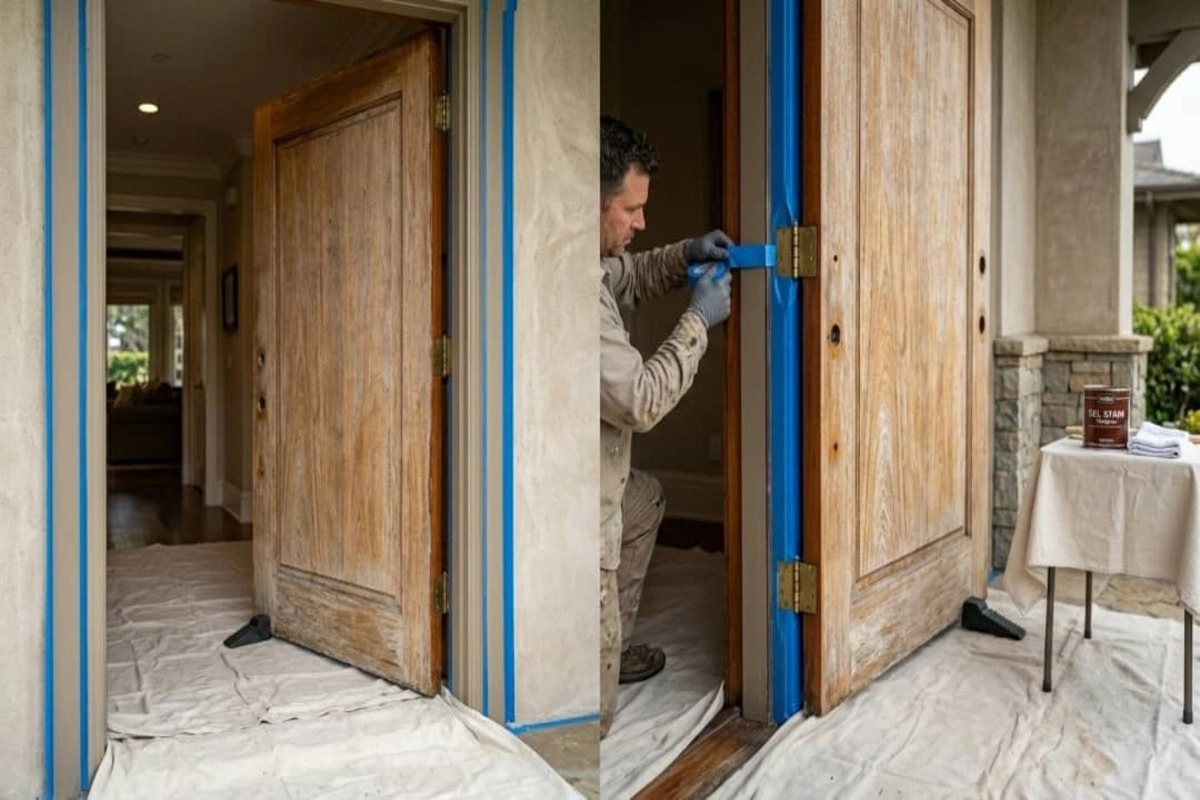
Step 1: Secure and Protect the Entryway (The Foundation of Success)
Since you are not taking the door down, your porch or entryway is now your active workshop. When you refinish exterior wood door surfaces vertically, protecting the surrounding environment is critical.
- Immobilize the Door: Open the door halfway and secure it tightly with heavy-duty rubber doorstops on both sides so it doesn’t swing while you work.
- Maximum Floor Protection: Lay down thick canvas drop cloths both inside your foyer and outside on the porch. Pro Tip: Do not use thin plastic for the floor; it becomes dangerously slippery when chemicals or exterior door stain spill.
- Hardware Management: Remove all easily detachable door hardware (knobs, deadbolts, and the knocker). If you are simultaneously restoring exterior door hardware or restoring antique doors, soak these pieces in a brass or metal cleaner separately. For hardware you cannot remove (like the hinges themselves), wrap them meticulously with high-quality blue painter’s tape.
- Glass and Frame Masking: If your door has sidelights or decorative glass inserts, tape heavy-duty plastic sheeting over them to protect against scratches and harsh chemical strippers. Don’t forget the stained door trim—tape off the surrounding frame if you aren’t planning on staining door frame components at the same time.
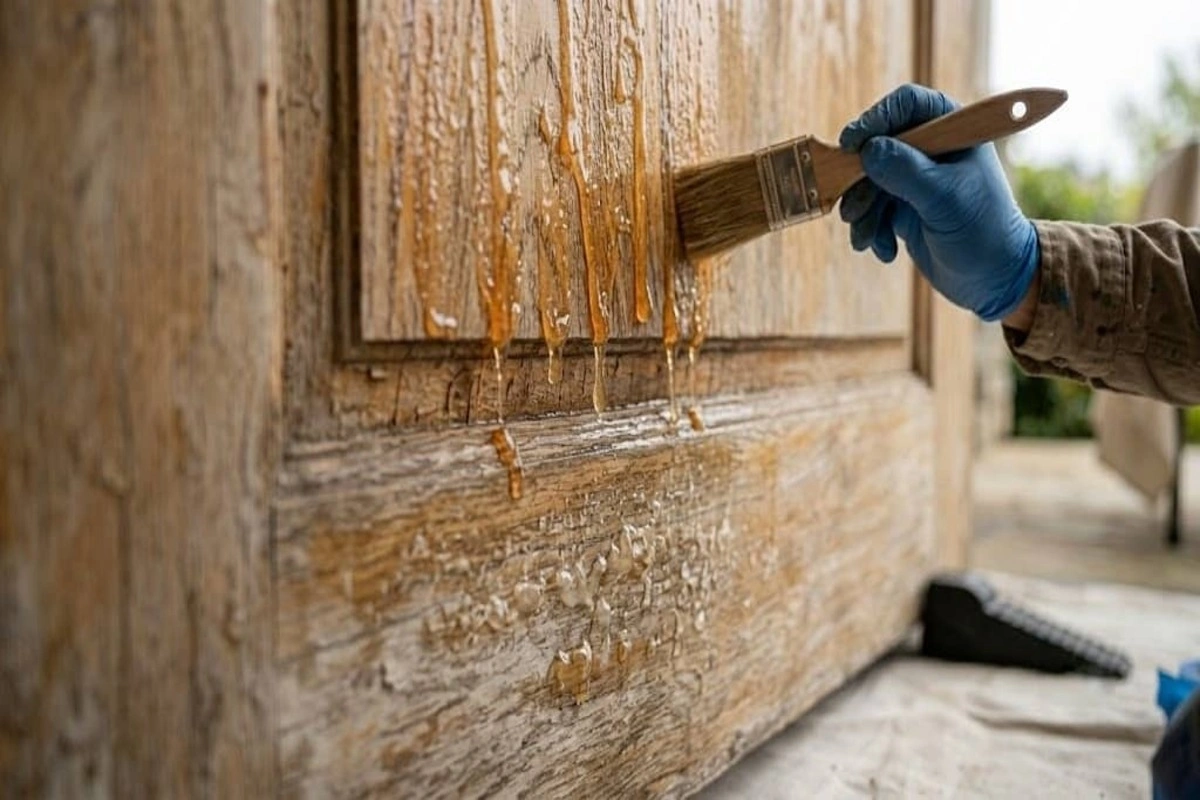
Step 2: Stripping the Old Finish (Mastering the Vertical Challenge)
If you are dealing with a sun-damaged front door repair or trying to execute a peeling varnish on door fix, you cannot just paint over the damage. You must strip the old layers down to the bare wood.
- Choose the Right Stripper: Apply a thick, even layer of a premium gel chemical stripper using a cheap, disposable chip brush. Gel is absolutely critical for door stripping and refinishing on hinges. Liquid solvents will immediately run down the panels, ruin your threshold, and fail to penetrate the old varnish.
- The Waiting Game: Let the gel stripper sit according to the manufacturer’s instructions (usually 15 to 30 minutes) until the old clear coat and external door stain begin to blister and bubble up.
- Safe Scraping: Gently scrape away the chemical sludge following the exact direction of the wood grain. Always use a plastic putty knife rather than metal to avoid gouging the softened wood. For intricate moldings and recessed panels, use a stiff nylon brush or a contour scraper.
- Neutralize: Once the bulk of the old finish is gone, wipe the entire door down thoroughly with mineral spirits and #0000 steel wool to neutralize any remaining chemicals and remove the sticky residue. This is vital before you sand and stain front door surfaces.
Step 3: Sanding for a Buttery-Smooth Surface
Once the stripped door is completely dry, it is time for the most labor-intensive part of restoring old front door aesthetics: sanding.
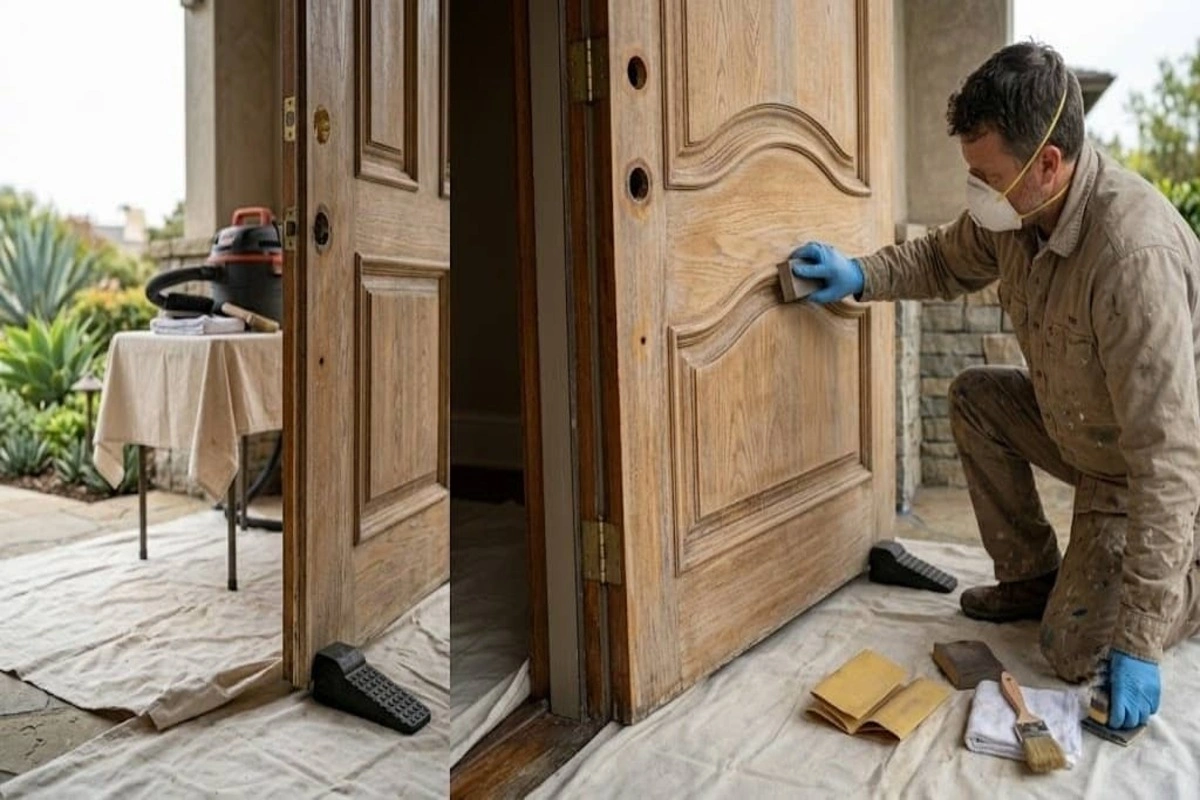
- The Three-Grit Rule: Start with an 80-grit sandpaper to aggressively remove any stubborn patches of old dark wood stain door finish or thick polyurethane. Move up to a 120-grit paper to smooth out the scratches left by the 80-grit. Finally, finish the entire surface with a 220-grit paper for a buttery-smooth, factory-like feel.
- Tools of the Trade: Use a motorized detail sander (like a mouse sander) for the large, flat panels and stiles. However, you must rely on folded sandpaper and manual elbow grease for the delicate, routed details. Always sand parallel to the wood grain.
- The Crucial Dusting Step: Dust is the ultimate enemy of a smooth door varnishing job. Use a shop vacuum with a brush attachment to remove heavy dust, then wipe every square inch of the wood with a sticky tack cloth.
Step 4: Applying the Exterior Door Stain (Fighting Gravity)
Choosing the right tint and product is essential for a beautiful wood front door restoration. Whether you are looking for the best stain for mahogany door, the best stain for oak doors, or trying to match an existing stained wood door trim, your application technique matters most.
- Stir, Don’t Shake: Stir your chosen wood stain for interior doors or exterior entryways thoroughly. Shaking creates air bubbles that will transfer to your door.
- The Section-by-Section Method: Apply the stain working from top to bottom. Follow the natural construction of the door: stain the recessed panels first, followed by the horizontal rails, and finish with the vertical stiles. This ensures any overlapping brush marks blend into the grain naturally.
- Wipe Instantly: Apply the gel stain on front door with a foam brush or rag, then wipe off the excess almost immediately with a clean, lint-free cloth. Because you are working vertically, gravity is actively trying to create dark, uneven drip marks at the bottom of your panels. Quick, decisive wiping is the secret to an even wood door staining.
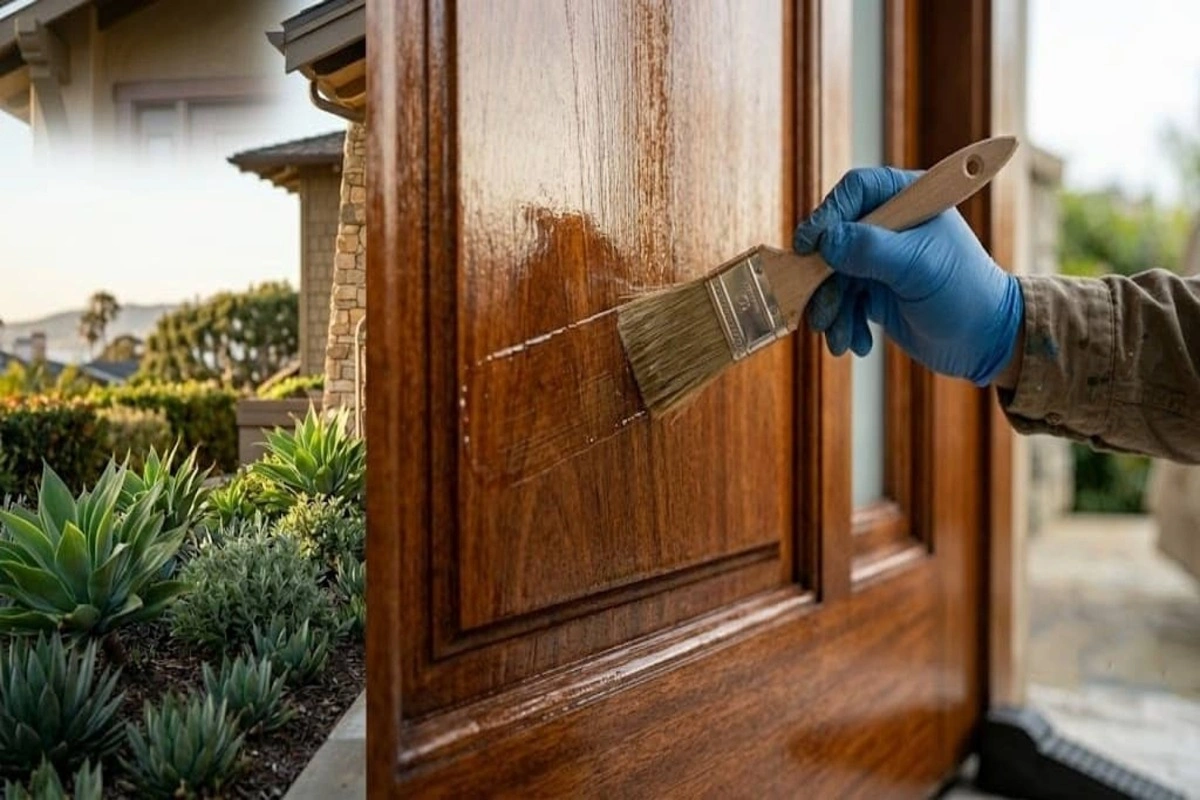
Step 5: Sealing and Door Varnishing (The UV Shield)
To protect your newly refinished wood front door from California’s intense, punishing UV rays and coastal moisture, you need a robust, marine-grade topcoat. Simply staining the wood is not enough; you must seal it.
- Application: Apply a premium marine-grade exterior polyurethane or spar varnish. Apply 2 to 3 very thin coats using a high-quality, natural bristle brush. Thin coats prevent sagging and dripping on a vertical surface.
- Between Coats: Allow adequate drying time as specified on the can. Before applying the next layer, lightly scuff the surface with a 220-grit sanding sponge. This knocks down any raised wood fibers and ensures maximum adhesion for a glass-like exterior wood door finish. Wipe away the dust with a tack cloth before the final coat.
The Secret to a Flawless Finish: Gel Stain vs. Traditional Liquid Stain
If you are wondering how to refinish mahogany front door elements or trying to stain a front door while it is still hanging in its frame, choosing the right material is half the battle. This is precisely where gel stains completely outshine traditional liquid penetrating stains.
When you attempt wood door refinishing vertically, a standard liquid exterior door stain will inevitably run down the stiles, pooling heavily at the bottom rails and creating dark, unsightly splotches that ruin the aesthetic.
Gel stain, on the other hand, boasts a thick, pudding-like consistency. Instead of soaking rapidly and deeply into the wood fibers, it sits gracefully on top of the surface. This unique property provides a rich, remarkably even color without the chaotic mess of drips and splatters.
This characteristic makes it hands-down the best exterior stain for front door restoration projects that involve working vertically. It is also the ultimate lifesaver when dealing with previously stained, blotchy woods, or when applying a gel stain wood door finish over unpredictable grains like pine, or even when restaining a fiberglass door with gel stain to achieve a faux-wood look. Whether you are using a professional-grade brand or a popular minwax gel stain, the control it gives you on a hanging door is unmatched.
Our Service Areas: Premium Door Refinishing Across Southern California
When investing in professional wood restoration, proximity and local expertise matter. We proudly bring our high-end restoration, staining, and repair services directly to your doorstep. Whether you are looking for architectural preservation in historic districts or modern UV-protective finishes in coastal communities, here is where you can find our expert craftsmen:
-
Greater Los Angeles & Surrounding Hubs To maintain the curb appeal of the region’s most prestigious properties, our premier Door refinishing Los Angeles division covers the entire metropolitan area, categorized by our specialized local teams:
-
Westside Elite Areas: We provide bespoke wood care tailored to the architectural standards of Beverly Hills, Bel Air, Brentwood, Santa Monica, Malibu, and Pacific Palisades.
-
Central & Creative Hubs: Full-service restoration for residential and commercial entryways in West Hollywood, Hollywood, and Central & Downtown LA.
-
Valley Residential Areas: Dedicated local crews servicing homeowners in Studio City, Sherman Oaks, Encino, Burbank, and Glendale.
-
San Gabriel Valley Excellence: Serving the historic and estate-style homes of Pasadena.
-
South Bay & Metro Area: Premium coastal wood protection for Manhattan Beach, Redondo Beach, and Palos Verdes Estates.
-
San Diego County Division Southern California’s climate demands specialized, sun-resistant marine-grade finishes. Our dedicated Door refinishing San Diego teams ensure your wood assets remain flawless across these key regions:
-
North County Coastal: Micro-climate specific finishes designed for coastal wear and tear.
-
Inland Luxury Neighborhoods: High-UV protection coatings tailored for inland estates.
-
Central & Coastal San Diego: Prompt, local restoration services for urban and coastal properties alike.
-
Greater San Diego Suburbs: Extending our premium wood maintenance and door refinishing to the surrounding residential communities.
Frequently Asked Questions (FAQs)
1. How much does door refinishing cost if I hire a professional?
The door refinishing cost varies based on the condition of the wood, the type of door, and your location in California. A standard cost to refinish a front door professionally ranges from $400 to $900. However, fixing severe sun-damaged front door repair or a complete stripping and refinishing wood doors service can cost more due to the intensive labor required.
2. Can you fix peeling varnish on a door without sanding it completely?
If you are dealing with minor peeling varnish on door fix, you might only need a light scuff-sand (with 220-grit paper) and a fresh coat of clear marine varnish. However, if the old finish has failed completely or the wood beneath is gray and weathered, you must use a chemical stripper and sand down to the bare wood for a proper door varnishing job.
3. What is the best exterior stain for a wood front door in California?
California’s intense UV exposure requires a robust finish. We recommend using a high-quality gel stain followed by at least two coats of exterior-grade spar urethane or marine varnish. These products contain UV blockers that protect your wood front door refinishing investment from fading and cracking.
4. How often should I refinish my wood entry door?
A professionally refinished wood front door should last 3 to 5 years, depending on sun exposure and weather conditions. However, you should apply a fresh maintenance coat of clear varnish every 1 to 2 years to protect the stain underneath and prevent extensive front door restoration needs in the future.
Don’t Want to Deal with the Mess? Let the Experts Handle It!
While it is entirely possible to refinish a front door without removing it, it is a messy, time-consuming process that requires precision, chemical strippers, and days of drying time. One mistake with a vertical exterior wood door restoration can result in permanent drip marks, uneven stain, and ruined weatherstripping.
Why spend your weekend sanding when you can leave it to the professionals?
At Calirefinishing, we specialize in premium door refinishing services across California. Whether you need a simple front door restoration, a complex wrought iron door refinishing, or a complete wood garage door refinishing, our expert team has the tools and experience to bring your entryway back to life—flawlessly and efficiently.
Protect your home’s curb appeal and save yourself the headache.
👉 Ready to restore your door’s original beauty? Contact Calirefinishing today for a free estimate!