Table of Contents

Door Refinishing California Editorial Team
Senior Door Refinishing Specialist · San Diego Market Division
⏱ 12 min read · Published August 2026 · San Diego Maintenance Guide
How often to refinish your San Diego entry door — and how to spot the critical warning signs before wood rot sets in.
🛡️ Licensed & Insured · ⭐ 5.0/5 from 110+ Google Reviews · 🌊 Climate-Matched Systems for San Diego County · 📸 Free Digital Estimates
📞 Call Now: +1 (619) 777-7171 | 📅 Request Your Free On-Site Estimate
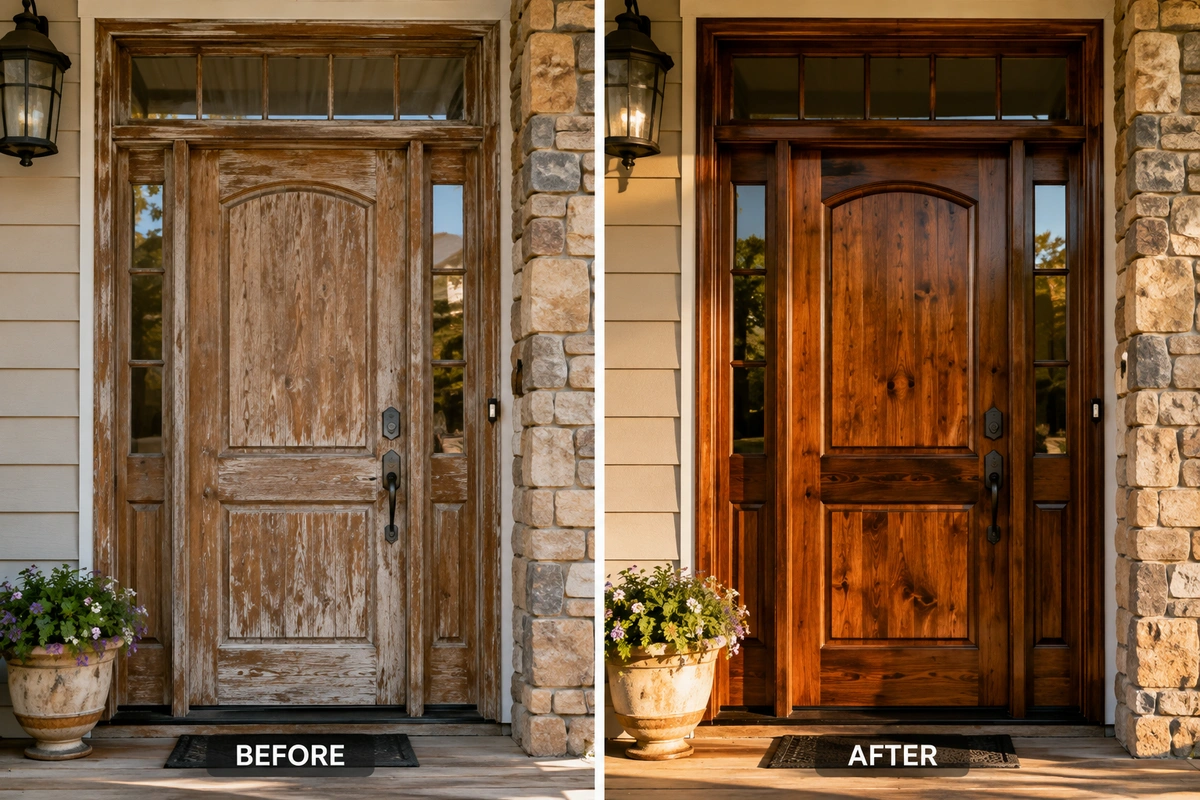
Determining the right time to restore your entryway is critical for protecting the structural integrity and aesthetic value of your home. Homeowners frequently ask when a maintenance cycle is strictly necessary versus when it is merely cosmetic. The reality is that the local environment heavily dictates this timeline. Waiting too long can transform a straightforward top-coat application into a complete stripping and sanding overhaul, which drastically changes the scope of the project.
When protective clear coats begin to thin under daily UV exposure and marine-layer humidity, they stop acting as a shield and start trapping microscopic moisture against the underlying grain. Addressing this phase early allows our specialists to perform a simple chemical cleaning and scuff-sand before applying fresh, high-grade UV sealants. If ignored, however, that minor surface fatigue escalates into grain cracking, water staining, and veneer delamination, necessitating a complete strip-down to raw timber. Staying proactive preserves the factory dimensions of your millwork and ensures your entryway continues to provide secure, beautiful curb appeal year after year.
The Impact of San Diego’s Coastal Climate on Your Entry Doors
The microclimates across Southern California present a unique set of challenges for exterior wood, metal, and fiberglass surfaces. From the dense marine layers near the coast to the intense, dry heat found further inland, these environmental stressors work continuously to break down protective clear coats, varnishes, and paints. Understanding these distinct zones is the first step in establishing a proper maintenance schedule.
| Microclimate Zone | Primary Environmental Threat | Recommended Protective Finish | Maintenance Interval |
|---|---|---|---|
| Coastal & Beachfront | Salt air abrasion and heavy morning marine moisture. | Marine-grade spar varnish (high flexibility, water-resistant). | 12 to 18 Months |
| Inland Valleys | Extreme afternoon heat and intense UV radiation. | High-build UV-blocking urethane with deep pigment stain. | 18 to 24 Months |
| Canyon & Foothills | Rapid temperature swings causing wood expansion/contraction. | Penetrating oil bases with flexible clear coats. | 18 to 24 Months |
Sun Damage and UV Degradation Factors
Ultraviolet radiation is the most aggressive element compromising the finish of your entryway. Direct sunlight acts as a magnifying glass, accelerating the breakdown of resins and binding agents in your door’s protective topcoat. Homes with south- or west-facing entryways experience this degradation exponentially faster than those shaded by porches or natural canopies. If your home is located in an area that receives intense afternoon sun, establishing a relationship with a specialist for sun-damaged front door repair is highly recommended to prevent irreversible warping or splitting of the wood grain.
Salt Air and Marine Moisture Penetration
Coastal proximity introduces airborne salinity and dense morning moisture, an incredibly destructive combination for organic building materials. Salt acts as an abrasive element, microscopically etching the surface of varnishes and clear coats over time. Once this protective barrier is compromised, the marine layer’s moisture penetrates the underlying wood or fiberglass. This continuous cycle of swelling during damp mornings and contracting during dry afternoons causes micro-fractures in the wood. Homeowners requiring La Jolla door restoration frequently face these exact salt-air challenges, necessitating specialized marine-grade spar varnishes to combat the elements.
Key Signs It Is Time for Door Refinishing San Diego Services
Relying purely on a calendar to dictate your maintenance schedule is a mistake. Environmental exposure varies dramatically even from street to street. Instead of guessing, homeowners must learn to identify the visual and tactile symptoms of a failing finish. Catching these early indicators saves significant time and structural damage.
| Service Tier | Best For | Process Included | Expected Longevity |
|---|---|---|---|
| Maintenance Topcoat | Doors with early signs of dullness; no peeling or exposed grain. | Chemical cleaning, scuff-sanding, and application of two marine-grade UV clear coats. | 12 to 24 Months |
| Standard Refinishing | Faded stain, minor clear coat peeling, and localized sun damage. | Partial stripping, deep sanding, stain color match, and three protective topcoats. | 2 to 4 Years |
| Complete Restoration | Severe weather damage, deep water stains, rot, or peeling varnish. | Total chemical strip to raw wood, neutralizing, custom staining, and full clear-coat build. | 4+ Years (with maintenance) |
Fading, Discoloration, and Loss of Gloss
The earliest warning sign of a deteriorating finish is a noticeable reduction in the door’s original sheen. A surface that was once rich and glossy will begin to look dull, matte, or cloudy. This indicates that the UV-protective clear coat has worn thin. At this stage, the wood beneath may begin to look bleached or grayed out. Addressing the issue now usually means a simple scuff-sand and the application of fresh topcoats. If you are noticing these early symptoms and are looking for exterior wood door refinishing near me, immediate action will prevent the need for a total strip-down.
Peeling, Flaking, or Blistering Varnish
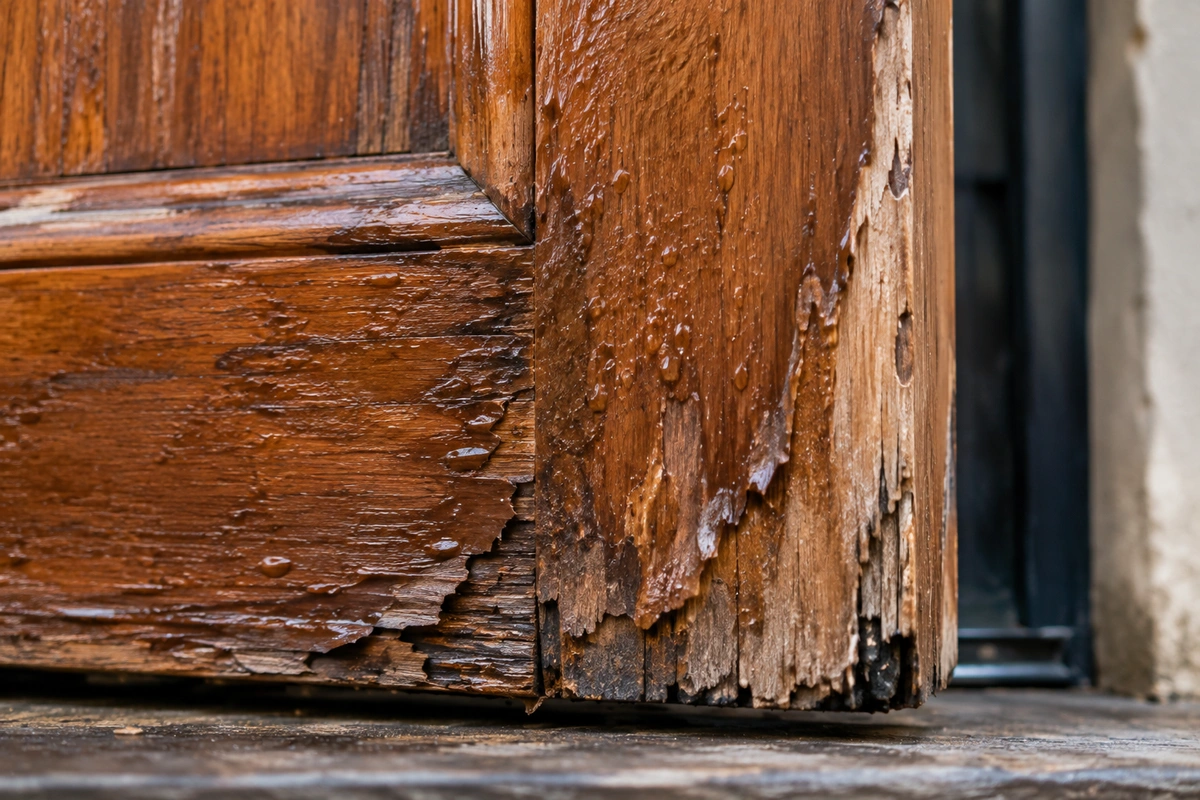
When the finish begins to physically separate from the door—appearing as flakes, peels, or raised blisters—the protective barrier has completely failed. Moisture has infiltrated the barrier and is pushing the varnish away from the wood. This is a critical state. Once moisture becomes trapped beneath the clear coat, rot can set in rapidly. At this point, the old finish must be completely stripped, the wood neutralized and sanded raw, and the entire staining and sealing process must start from scratch to properly refinish stained wood door surfaces back to their original factory-grade standard.
Average Maintenance Intervals by Door Material
Different substrates require completely different maintenance approaches and schedules. A dense hardwood responds to environmental stress differently than engineered fiberglass or wrought iron. The table below outlines the expected durability of finishes across various materials in our specific regional climate.
Solid Wood Front Door Refinishing Timelines
Natural wood is dynamic; it expands and contracts with atmospheric changes. Rich, dense woods like mahogany require consistent topcoat maintenance to prevent the rich color from washing out into a dull gray. Typically, a clear coat refresh is needed every 12 to 24 months depending on exact sun exposure. When properly maintained, you never actually re-stain the door; you simply replenish the UV-protective varnish. However, if a homeowner is late on this schedule, they will need professionals capable of refinishing a wood exterior door down to the bare grain to rebuild the stain layer correctly.
Fiberglass and Wrought Iron Restoration Schedules
Fiberglass entryways mimic the look of wood but behave very differently. They do not rot, but their factory-applied clear coats will eventually blister and turn yellow under constant UV bombardment. They generally offer a longer grace period, requiring a fresh protective coat every 2 to 4 years. Conversely, wrought iron is highly susceptible to coastal moisture. Oxidation begins at microscopic scratch points, eventually bubbling up the paint. If you see early signs of rust forming near the hinges or scrollwork, specialized wrought iron door restoration is necessary to apply rust-inhibitive primers and marine-grade enamel finishes before the structural integrity of the metal is compromised.
Material-Specific Restoration Requirements for San Diego Entries
Different entry assemblies react to southern California’s coastal environment in entirely distinct ways, meaning that a uniform approach to maintenance will inevitably lead to premature failure. Solid hardwoods, composite fiberglass, and architectural metal each demand specific chemical treatments, preparation techniques, and finishing agents to withstand marine air and intense ultraviolet exposure. Understanding these structural variations ensures that your entryway receives the exact care required to maximize its lifespan and maintain its visual depth.
| Door Material | Common Damage Signs | Restoration Method | Finish Type |
|---|---|---|---|
| Solid Wood (Mahogany, Oak) | Fading, graying wood grain, peeling clear coat, water spots. | Chemical strip, structural sand, stain application, UV clear coat. | Penetrating stain & Spar Varnish |
| Fiberglass (Wood-Grain) | Chalky appearance, blistered factory finish, yellowing. | Chemical de-glossing (no heavy sanding), specialized gel stain. | Composite-safe Gel Stain & UV Sealant |
| Wrought Iron / Metal | Surface rust, paint bubbling, oxidation near hinges. | Wire wheeling, rust neutralization, and protective priming. | Rust-inhibitive Marine Enamel |
Why Choose Door Refinishing California for Your San Diego Property
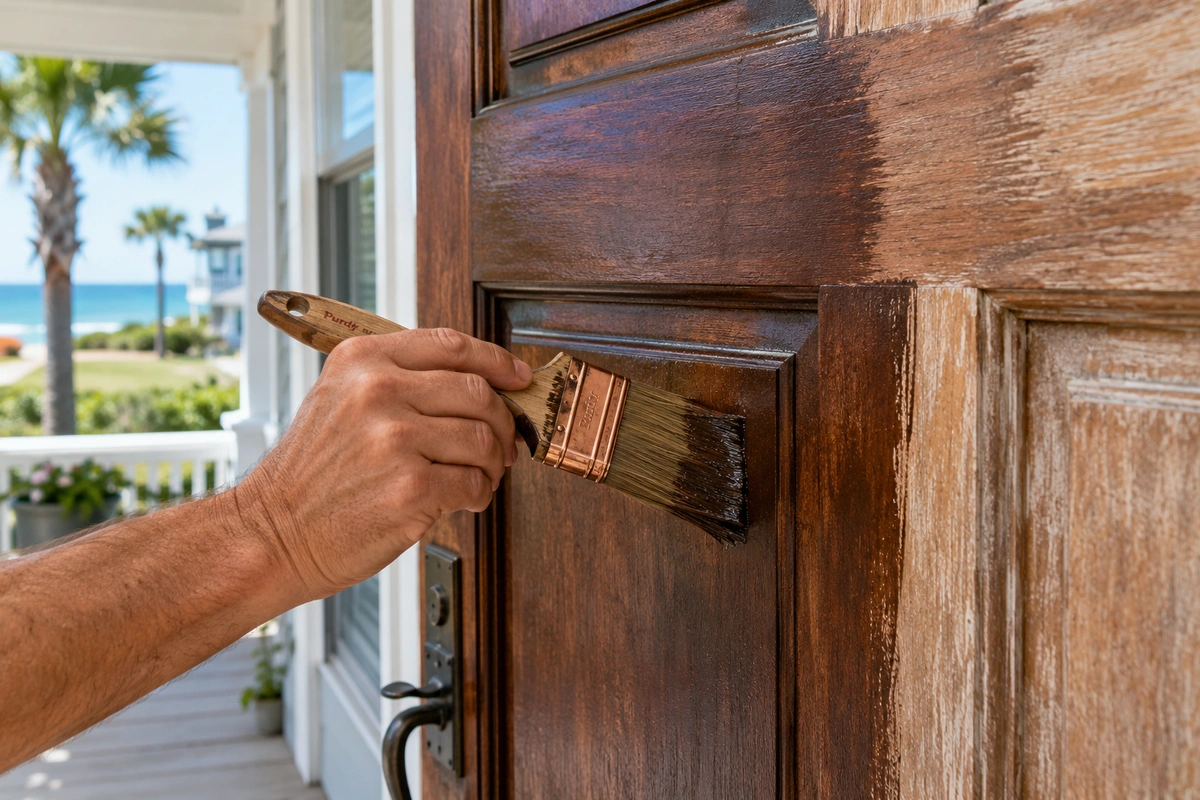
Selecting a dedicated restoration specialist ensures that your investment receives the precise technical attention it requires from start to finish. Unlike multi-trade contractors who treat front doors as an afterthought, our craftsmen focus exclusively on the complex chemistry of wood stabilization, marine-grade sealing, and architectural preservation. The comparison below highlights the operational differences between hiring experienced restoration professionals versus general residential painters.
| Service Feature | Our Door Restoration Specialists | General House Painters |
|---|---|---|
| Door Removal | Completed on hinges; your home remains secure overnight. | Often removed and taken off-site, leaving home exposed. |
| Materials Used | Specialized marine-grade spar varnishes and deep-penetrating gel stains. | Standard exterior latex paint or generic deck stains. |
| Surface Prep | Chemical stripping and hand-sanding to preserve door profiles. | Heavy orbital sanding that can ruin intricate wood details. |
| Hardware Handling | Hardware carefully masked or removed and reset post-cure. | Often painted over or poorly taped, leaving messy edges. |
Serving Door Refinishing and Maintenance Across San Diego County Communities
Our specialized restoration teams provide on-site evaluations, preventative maintenance topcoats, and complete wood, fiberglass, and iron renewals across every microclimate in San Diego County. Because coastal air, marine layers, and inland thermal swings affect entryways differently depending on your exact neighborhood, our preservation work is tailored directly to your local environmental exposure. Whether you are maintaining a historic property near the coast or a custom estate in the inland valleys, we coordinate precise service routing across the entire metropolitan area.
Our dedicated regional service coverage encompasses all major San Diego communities and high-priority surrounding areas:
-
Coastal & Beachfront Neighborhoods: We deliver specialized salt-air protection and marine-grade clear coats through our La Jolla door restoration programs, alongside dedicated coverage in Pacific Beach, Point Loma, Coronado, and Del Mar.
-
North County Coastal Communities: Addressing intense ultraviolet degradation and damp coastal air, we provide expert care such as exterior wood door refinishing near me across Encinitas, Solana Beach, Carlsbad, Oceanside, and Vista.
-
Inland Luxury & Foothill Suburbs: Managing extreme thermal expansion, dry heat, and temperature swings with specialized care, including wrought iron door restoration in Rancho Santa Fe, Poway, and Scripps Ranch.
-
Central Metro & Urban Communities: Providing comprehensive multi-door overhauls and seasonal maintenance scheduling throughout Mission Hills, Hillcrest, Clairemont, and surrounding central residential districts.
-
Greater San Diego Suburbs: Delivering reliable, high-end woodwork restoration and protective sealing across Chula Vista, La Mesa, El Cajon, and Escondido.
What Real San Diego Customers Say About Our Timing
Our maintenance schedules and restoration techniques have been tested and proven across hundreds of local homes. Our verified client experiences speak directly to the longevity of our finishes.
-
“I waited a few weeks before writing this because I wanted to be sure. After rain, sun, and daily use, the door still looks fantastic. The finish isn’t sticky, blotchy, or overly shiny. It just looks like good wood taken care of properly. That’s exactly what I wanted. I recommend their services and I think they had fair pricing compared to the quality they provided.” — Ali Fazeli
-
“I’ve had a great experience with Door Stain. I first called them to refinish a front door that was in terrible shape. The results were stunning. I’ve now used them for multiple doors, and they never fail to impress. Their expertise in door refinishing makes all the difference.” — Alireza Hodhodi
-
“We had a 40 year old wood door in our California home they did the best door refinishing and antique refinishing now it keeps the history but looks completely new.” — Yah Ab
Frequently Asked Questions About Door Maintenance
Proper maintenance requires an understanding of materials, climate interaction, and protective chemistry. Below are the most common technical questions our teams receive in the field.
How long does a standard door refinishing process take?
Most projects are completed within 1 to 2 consecutive days. The door remains secured and locked on its hinges overnight while the initial layers of varnish cure.
Can I change the color of my door from dark to light?
Yes, but transitioning from a dark stain to a light stain requires aggressive chemical stripping and deep sanding to remove all pigment from the wood pores before a lighter stain can be applied.
What type of clear coat offers the best UV protection?
We exclusively utilize marine-grade spar varnishes. These formulations contain superior UV absorbers and remain flexible upon curing, allowing them to expand and contract with the wood without cracking.
Do fiberglass doors need to be sanded?
No. Sanding fiberglass aggressively will destroy the stamped wood-grain texture. We use chemical de-glossers and specialized gel stains formulated specifically for fiberglass composite adhesion.
How do I clean my door between refinishing intervals?
Wipe the surface gently with a microfiber cloth and a heavily diluted mixture of mild dish soap and water. Never use harsh household degreasers, bleach, or abrasive sponges, as these will immediately strip the UV protection.
Will refinishing fix a warped wooden door?
Refinishing treats the surface and protects against future moisture intrusion, but it cannot reverse structural warping or twisting that has already occurred within the lumber.
Do you remove the door from the hinges to work on it?
We perform the vast majority of our work with the door hung in place. This ensures the frame and weatherstripping continue to function perfectly, and your home remains entirely secure overnight.
Is hardware replacement included in the process?
While we carefully mask or temporarily remove handles, kickplates, and knockers to ensure a flawless finish underneath, supplying new hardware is separate from the refinishing cost. We are happy to install new hardware you provide during the reassembly phase.
How soon after the job is finished can I close my door?
We use fast-drying professional varnishes. Generally, the door can be closed gently against the weatherstripping within 2 to 4 hours of the final coat application.
Do you provide a maintenance plan after the initial restoration?
Yes. We log the exact stain formulas and topcoat types used on your home. We recommend a simple topcoat refresh every 12 to 18 months, which is a fraction of the cost of a full restoration.
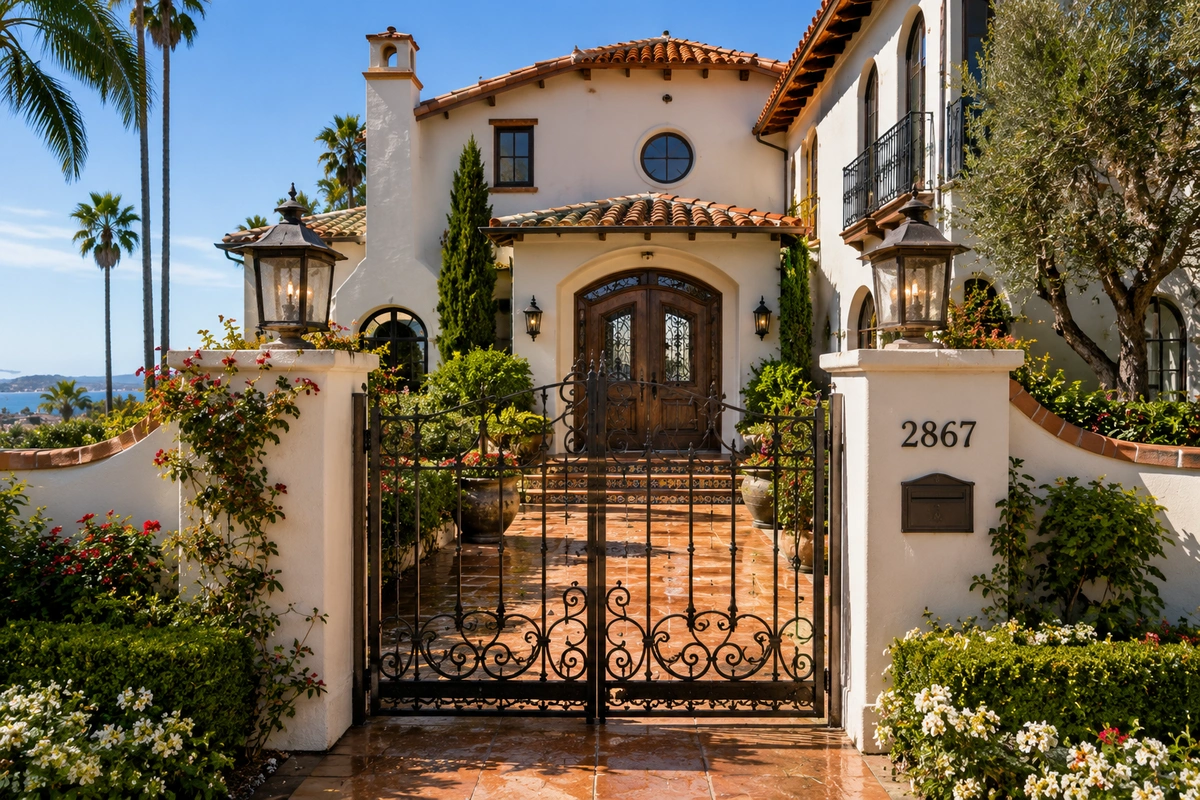
Request Your Free Door Assessment
If your entryway is showing signs of fading, peeling, or water damage, do not wait until the wood rots. Upload a photo of your door using the secure form below. Our team in San Diego will review the damage and provide a precise, no-obligation estimate based on your specific maintenance needs.
Get a Free Refinishing Estimate
Door Refinishing California | 12154 Putting Green Row, San Diego, CA 92128 | (619) 777-7171